Q: What is included in the 3kVA Hybrid Solar System?
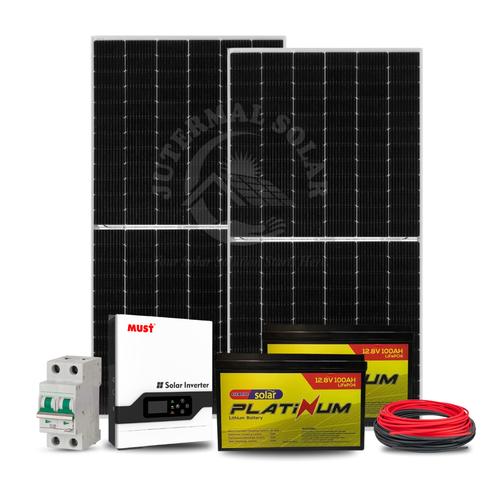
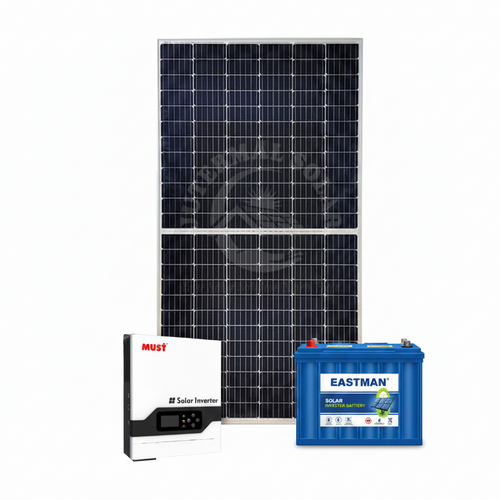
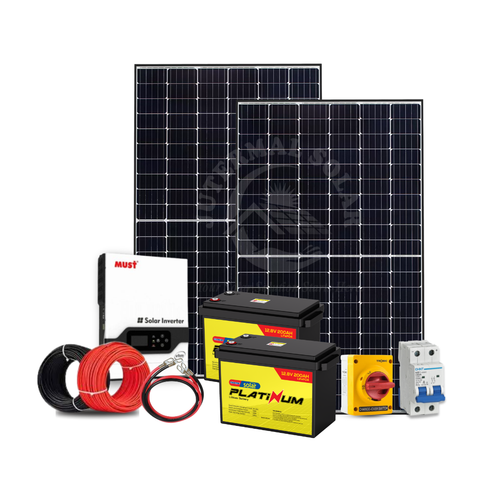
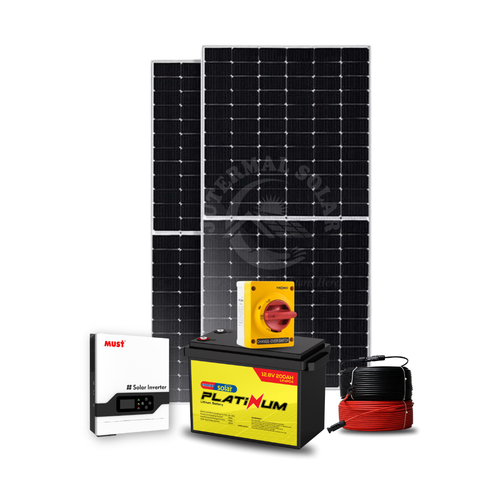
A: The package includes a 3.2kVA hybrid solar inverter, two 200Ah Eastman tubular batteries, four 450W high-efficiency solar panels and complete installation accessories.
Q: What installation accessories are included?
A: The system includes cables, breakers, solar-panel mounting structures, connectors and essential protection components. Extra materials may be required depending on the roof type, cable distances and site conditions.
Q: What is the total solar-panel capacity?
A: The four 450W solar panels provide a combined solar-generation capacity of 1,800W, equivalent to 1.8kW.
Q: What appliances can this solar system power?
A: It can power compatible lights, televisions, Wi-Fi routers, laptops, fans, refrigerators and selected essential household or business appliances. The combined running load and appliance starting surges must remain within the inverter’s capacity.
Q: Can the system power several appliances simultaneously?
A: Yes. The 3.2kVA inverter can support several compatible appliances at the same time, provided their combined power consumption remains within its operating limits.
Q: Can it power a refrigerator?
A: Yes. It can power a compatible refrigerator, provided the refrigerator’s running wattage and compressor-starting surge remain within the inverter’s capacity. Refrigeration will reduce the available battery-backup time.
Q: How long can the two 200Ah batteries provide backup power?
A: Backup duration depends on the connected appliances, battery charge, battery condition and overall power consumption. Lights, Wi-Fi and phone charging will run longer than televisions, refrigerators and other higher-consumption appliances.
Q: Can the system provide overnight backup?
A: Yes. It can provide overnight backup for carefully managed essential loads such as lighting, Wi-Fi, television and device charging. Actual runtime depends on how many appliances are operating.
Q: Can the panels power appliances while charging the batteries?
A: Yes. During suitable sunlight conditions, the 1.8kW solar array can support connected appliances while charging the batteries. Performance depends on sunlight intensity, panel positioning and daytime electricity consumption.
Q: Does the system automatically switch during a blackout?
A: Yes. The hybrid inverter manages solar, battery and utility-grid electricity and can provide stored battery power when grid electricity is unavailable.
Q: Can the batteries also be charged from grid electricity?
A: Yes. The hybrid inverter supports both solar charging and utility-grid charging, depending on its configuration and selected settings.
Q: Does the system prioritise solar power?
A: Yes. The inverter can prioritise available solar energy before drawing power from the batteries or utility grid, helping reduce electricity costs.
Q: What are the advantages of tubular batteries?
A: Tubular batteries are designed for deep-cycle use and repeated charging and discharging. They provide dependable backup and are suitable for solar systems that experience regular power outages.
Q: Are tubular batteries maintenance-free?
A: Tubular batteries may require periodic inspection and maintenance depending on the exact model. Battery electrolyte levels, terminals and connections should be checked according to the manufacturer’s instructions.
Q: Is this system suitable for a residential home?
A: Yes. It is suitable for homes requiring reliable power for lighting, television, internet access, refrigeration, fans and other compatible essential appliances.
Q: Is the system suitable for a shop or retail store?
A: Yes. It can support compatible shop equipment such as lights, Wi-Fi routers, televisions, laptops, POS equipment and selected refrigeration appliances.
Q: Is the system suitable for an office?
A: Yes. It can provide backup for office lighting, internet equipment, laptops, computers and other compatible electronics.
Q: Is the system suitable for a clinic or school?
A: Yes. It can support compatible lighting, communication equipment, computers and selected essential appliances. Medical or specialised equipment should be assessed separately before installation.
Q: Can the system be used in an off-grid location?
A: Yes. It is suitable for rural and off-grid locations. The daily energy demand should be assessed to ensure the panel and battery capacity can meet the required usage.
Q: Can it power an electric cooker, kettle, iron or water heater?
A: These appliances consume significant amounts of power and may overload the inverter or discharge the batteries quickly. They are not recommended for regular use without a professional load assessment.
Q: Can it power an air conditioner or water pump?
A: Compatibility depends on the appliance’s running wattage and starting surge. A professional assessment is recommended before connecting an air conditioner or water pump.
Q: Can I add more batteries or solar panels later?
A: Yes. The system is expandable using compatible components. Any additions must remain within the inverter’s supported battery configuration, charging capacity and maximum solar-input limits.
Q: Is professional installation available?
A: Yes. Professional installation support is available to ensure the panels, inverter, batteries and protection equipment are connected and configured safely.
Q: Is nationwide delivery available?
A: Yes. Nationwide delivery and installation support are available. Charges and scheduling may depend on the customer’s location and installation requirements.
Q: Does the system require regular maintenance?
A: Keep the solar panels clean, inspect cables and electrical connections periodically, and follow the battery manufacturer’s maintenance instructions. The inverter and batteries should be kept in a dry, secure and well-ventilated location.
Q: Will this system reduce my electricity bill?
A: Yes. It can reduce reliance on utility electricity by powering appliances with solar energy during the day and using stored battery energy when required. Actual savings depend on sunlight availability and daily electricity usage.